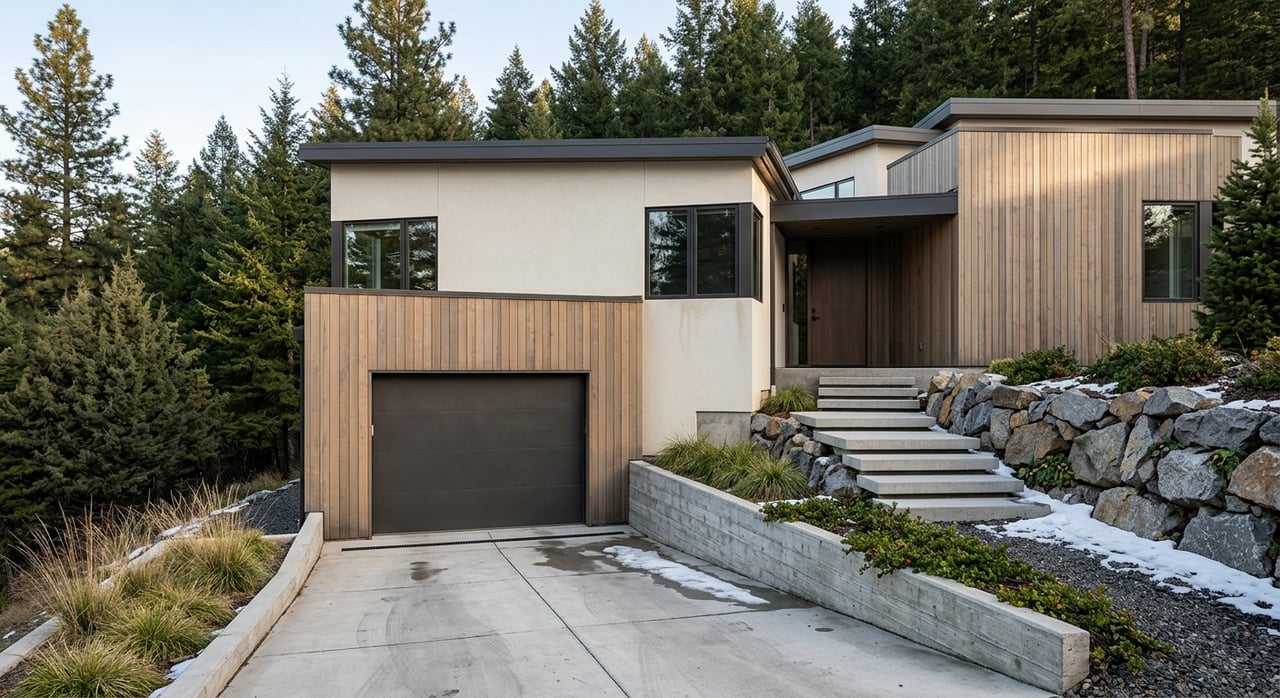
If you are deciding between Evergreen and a Denver suburb, you are really choosing between two different ways of living. One gives you a mountain-residential setting with more land, trail access, and a stronger connection to the outdoors. The other usually offers a denser layout, easier access to daily services, and a more predictable routine. This guide will help you compare the tradeoffs so you can decide which fit makes the most sense for your life. Let’s dive in.
Evergreen Feels Different by Design
Evergreen is not best described as a typical suburb. Jefferson County’s area plan frames it as a mountain-residential community with large open-space areas, scattered village-like activity centers, and a pattern where many residents commute elsewhere for work. The same plan notes that local services cover basic needs, but not the full range of amenities you would expect in the city.
That distinction matters when you start home shopping. In many Denver-area suburbs, neighborhoods are built around convenience, denser housing patterns, and easier access to a broader set of shopping and services. In Evergreen, the setting itself is a major part of daily life.
Housing Patterns and Lot Size
One of the biggest differences between Evergreen and Denver suburbs is how the land is used. Jefferson County’s planning framework for Evergreen emphasizes preserving mountain scale and character. The county says new development should fit the surrounding neighborhood, and in some areas lot sizes are intended to stay the same or even increase.
The county also ties density decisions to very practical site conditions. Wildfire hazard, slope, wildlife habitat, water, septic, and access all play a role. That means the physical land has a much bigger influence on what housing looks like in Evergreen than it does in many lower-elevation suburban communities.
Some rural-cluster areas in Evergreen allow homes on parcels as small as 5 acres, while other areas are characterized by large lots and steep slopes. At the same time, Evergreen is not all one thing. The county plan also recognizes older subdivisions and mixed residential patterns, especially around activity centers.
By contrast, a suburban benchmark like Centennial is much denser. Census data shows Centennial at 3,647.9 people per square mile, compared with 807.8 in Evergreen. In day-to-day terms, that density gap usually points to smaller lots, more subdivision-style streets, and less topographic variation in the suburbs.
Trails and Open Space Access
For many buyers, Evergreen stands out because outdoor access is not just nearby. It is woven into everyday life. Jefferson County Open Space manages more than 275 miles of trail, and the county specifically contrasts suburban trails like Crown Hill in Wheat Ridge with more rugged natural-surface trails at Elk Meadow in Evergreen.
Alderfer/Three Sisters, close to the heart of Evergreen, has the highest trail density of any foothills park. Elk Meadow also connects Bergen Park to Evergreen Lake through the Pioneer Trail. If you picture morning trail runs, weekend hikes, or quick after-work time outside, Evergreen offers a very different feel from a more conventional suburb.
Jefferson County’s Evergreen area plan describes local open space as a defining feature of the community. It also notes that these parks serve not only local residents, but much of the metro area. That helps explain why buyers often see Evergreen as offering a more immediate mountain-outdoor experience than most Denver suburbs.
Climate and Snow Expectations
Climate is one of the clearest practical differences between Evergreen and the Denver suburbs. Evergreen sits at about 6,985 feet in elevation. NOAA’s 1991 to 2020 normals for the Evergreen station show an annual mean temperature of 44.7°F, 18.62 inches of precipitation, and 80.8 inches of snowfall.
By comparison, the Denver International Airport station sits at 5,414 feet, with an annual mean temperature of 51.2°F, 14.48 inches of precipitation, and 35.4 inches of snowfall. That means Evergreen is about 6.5°F cooler on average and receives about 2.3 times as much snowfall as the Denver airport station.
The Colorado Climate Center explains that elevation strongly shapes climate across Colorado. Mountain areas are generally cooler, and conditions can change quickly over short distances. The center also notes bigger day-night temperature swings and stronger high-elevation sunlight.
For homeowners, those numbers translate into real lifestyle considerations. In Evergreen, you should expect more snow removal, more seasonal maintenance, and more planning around weather than you would in a lower-elevation suburb. That does not make Evergreen better or worse. It simply means the ownership experience is different.
Wildfire Readiness Matters in Evergreen
If you are comparing homes in Evergreen with homes in the suburbs, wildfire readiness should be part of the conversation. The Colorado State Forest Service says homes in or near natural vegetation are in the wildland-urban interface and are at risk from wildfire. It recommends home hardening and defensible space as key risk-reduction steps.
Jefferson County’s Evergreen plan reinforces how central this is in the foothills. The county explicitly includes wildfire hazard in density and site-planning decisions. In practical terms, buyers looking in Evergreen need to think not only about the home itself, but also about the surrounding land, vegetation, slope, and access.
That is a different decision-making process than what many buyers are used to in suburban neighborhoods. In the suburbs, maintenance may lean more toward yard size and convenience. In Evergreen, site conditions often play a larger role in long-term ownership planning.
Commute and Daily Convenience
Evergreen offers space and scenery, but it is not designed as a self-contained urban center. Jefferson County says most working residents commute outside the area. The county also notes that secondary commercial needs are often met elsewhere, and that traffic funnels onto SH 74, Evergreen Parkway, County Road 73, and I-70.
The area plan warns that growth can bring either road expansion or increased congestion and travel times. That means your daily drive may feel less predictable than it would in a more conventional suburb. If commute consistency is one of your top priorities, this is an important point to weigh.
Census data shows Evergreen’s mean travel time to work at 28.8 minutes, compared with 25.9 minutes in Centennial. That is not a dramatic gap on paper, but in real life, weather, terrain, and roadway patterns can shape how a commute feels from day to day.
Daily services are another part of the tradeoff. Evergreen has local essentials, but the county makes clear that it does not provide the full range of amenities you would find in a more urban or suburban setting. If you value quick access to a broader mix of shopping, services, and city-scale convenience, Denver suburbs may align better with your routine.
Price and Value Tradeoffs
Cost is often part of the comparison. Census data shows a median owner-occupied home value of $829,400 in Evergreen, compared with $658,100 in Centennial. While every property is unique, that difference helps illustrate the broader decision many buyers are making.
In Evergreen, you may be paying for more space, more scenery, and more direct access to open space and foothills recreation. In a suburb like Centennial, the typical tradeoff may be a lower median home value, a slightly shorter commute, and a more convenience-oriented layout.
The right answer depends on what you value most. Some buyers want land, privacy, and a mountain setting close to the metro area. Others would rather prioritize easier maintenance, denser services, and a simpler weekday routine.
Who Evergreen Often Fits Best
Evergreen tends to appeal to buyers who want a mountain-rural setting without leaving the Front Range orbit. If you like the idea of more land, direct trail access, and a home environment shaped by the landscape, Evergreen may feel like a strong fit. It can also suit buyers who are comfortable planning around snow, slopes, and more variable travel conditions.
Denver suburbs often fit buyers who want convenience first. A lower-maintenance lot, easier access to daily services, and a more predictable commute can be a better match if your schedule is full and efficiency matters. For many households, that practicality is the deciding factor.
Neither option is universally better. The key is to match the location to the way you actually want to live, not just the way a home looks online.
How to Compare Evergreen vs Suburbs
If you are narrowing your search, it helps to compare these areas through a lifestyle lens instead of just price per square foot. Ask yourself a few simple questions:
- Do you want trail access to be part of daily life?
- Are you comfortable with more snow and seasonal maintenance?
- Would a larger lot improve your quality of life?
- How important is quick access to a wider range of services?
- How much commute variability can you realistically tolerate?
Those questions usually reveal the answer faster than a feature checklist. Evergreen and the Denver suburbs can both be great choices, but they serve different priorities.
If you are weighing foothills living against suburban convenience, working with a team that understands both can make the search much clearer. The Corbitt Group helps buyers and sellers navigate Front Range neighborhoods with practical, local guidance tailored to how you want to live.
FAQs
How is Evergreen different from a Denver suburb?
- Evergreen is a mountain-residential community with large open-space areas, village-like activity centers, and many residents commuting outside the area, while Denver suburbs are generally denser and more convenience-oriented.
What are lot sizes like in Evergreen compared with Centennial?
- Evergreen generally has lower density and often larger lots, with some rural-cluster areas allowing parcels as small as 5 acres, while Centennial’s much higher population density usually points to smaller suburban lots.
How much more snow does Evergreen get than Denver?
- NOAA normals show Evergreen receives about 80.8 inches of snowfall annually compared with 35.4 inches at the Denver airport station, or about 2.3 times as much.
Is Evergreen a good fit if you want trail access?
- Evergreen is especially trail-oriented, with nearby access to parks like Alderfer/Three Sisters and Elk Meadow, making outdoor recreation a more immediate part of daily life than in many Denver suburbs.
What should homebuyers know about commuting from Evergreen?
- Jefferson County says many working residents commute outside the area, and traffic funnels onto a limited set of main routes, so buyers should expect a commute that may be less predictable than in a typical suburb.
What ownership factors matter more in Evergreen homes?
- Buyers in Evergreen should plan for more snow removal, more weather-related upkeep, and greater attention to wildfire readiness, slope, access, and other site-specific conditions.