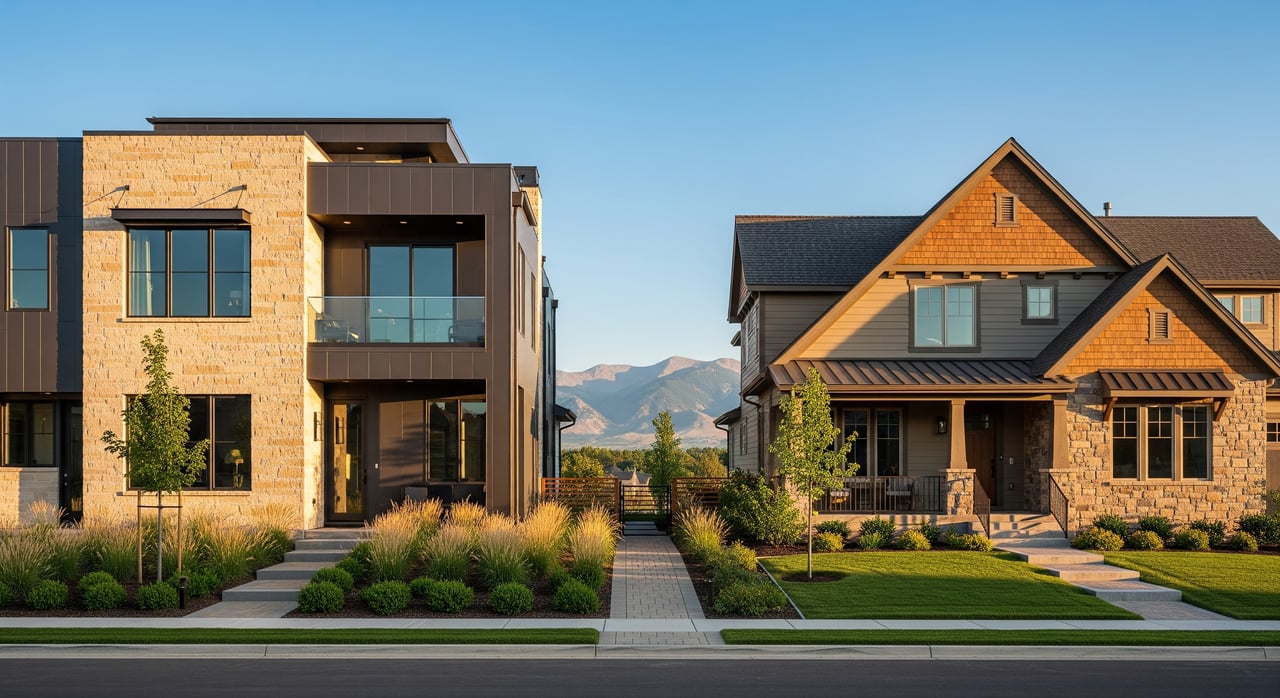
Trying to decide between a townhome and a single-family home in Centennial? You are not alone. Both options can work well depending on your budget, maintenance tolerance, and lifestyle. In this guide, you will learn how ownership, HOA rules, costs, maintenance, privacy, and resale potential compare locally so you can choose with confidence. Let’s dive in.
What you own with each option
Townhomes in Colorado: two common structures
Many Centennial townhomes fall into one of two legal setups:
- Condominium form: You own the interior of your unit and a shared interest in common areas. The association typically manages exterior elements and shared spaces.
- Fee-simple townhome or rowhome: You own the structure and the land beneath your unit, even though walls may be attached. These communities often still have an HOA for shared areas and standards.
In both cases, association documents define rules, maintenance responsibilities, and assessments. Always review them carefully before you make an offer.
Single-family detached: control and responsibility
Most single-family homes are fee-simple. You own the house and the lot. You typically have more freedom to change the exterior and landscaping, and you also carry more responsibility for upkeep. Some neighborhoods in Centennial have HOAs with limited services, while others have no HOA at all.
HOA rules, dues, and what they cover
What to expect with townhome HOAs
Townhome associations usually handle a meaningful portion of exterior care and shared spaces. That can include exterior painting, roof or siding in some communities, landscape care for common areas, snow removal on shared paths, and amenities like a pool or clubhouse. Dues reflect what is covered. Coverage varies by community, so verify details for each property.
Single-family HOAs in Centennial
Single-family HOA dues in the area range from minimal standards for common landscaping to more robust amenities. In many detached-home neighborhoods, you will handle your own yard, snow removal on your driveway and private walkways, and exterior repairs unless the governing documents say otherwise. If there is no HOA, your maintenance and rules are guided by city codes and any recorded covenants on the property.
What to review before you buy
Before you commit, request and read the association’s governing documents. Key items include:
- Covenants, conditions and restrictions, bylaws, and rules.
- Current budget, reserve study if available, and recent financials.
- Insurance declarations to confirm master policy coverage and whether it is walls-in or walls-out.
- Minutes from recent board meetings that may note special projects or assessments.
- Any rental, pet, parking, or exterior modification rules that could affect your use.
These documents bind you as an owner, so treat them like part of the property.
Cost and financing differences
Purchase price patterns in Centennial
Across the Denver metro, including Centennial, townhomes and condos often list at lower prices than comparably located single-family homes. That can make attached homes attractive for first-time buyers or anyone who prefers a lower entry point. Price gaps vary by neighborhood, age, condition, and amenities. It is common to see overlap between larger, newer townhomes and smaller single-family homes in the same area.
How HOA dues affect your monthly budget
When you compare options, look at the full monthly picture:
- Mortgage payment and interest.
- Property taxes.
- HOA dues, if any, and what they cover.
- Homeowners insurance.
- Average utilities and a maintenance reserve.
Lenders count HOA dues in your debt-to-income ratio, which can affect your loan qualification. Higher dues can be worth it if they replace exterior insurance, snow removal, or significant maintenance, but you should quantify the tradeoffs.
Financing and insurance basics
Financing is straightforward for single-family homes. For townhomes in condominium projects, some loan programs require the project to meet specific approval standards. Insurance differs as well:
- Townhome or condo units often use an HO-6 policy for the interior and personal property, while the HOA’s master policy covers exterior and common areas. Verify where the master policy stops and your policy begins.
- Single-family homes typically use an HO-3 or HO-5 policy that covers the structure and your belongings. You are fully responsible for exterior repairs.
An insurance agent can review the master policy and recommend appropriate coverage for your situation.
Maintenance and day-to-day living
Who fixes what
In many townhome communities, the association manages roof, exterior, and common landscaping. Inside the unit, you handle systems like HVAC, appliances, and interior finishes. The exact split can differ, so confirm whether roofs, foundations, driveways, and fences fall under the HOA or the owner.
With a single-family home, you manage the roof, siding, gutters, yard and irrigation, driveway, fencing, and trees unless a neighborhood agreement says otherwise. Plan for routine upkeep and periodic replacements of major systems.
Privacy and noise
Single-family homes provide more separation from neighbors. No shared walls can mean less noise transfer and more privacy. Townhomes share at least one wall and often sit closer to adjacent units. Construction quality matters for sound attenuation. If noise is a concern, ask about party-wall design and insulation details.
Outdoor space and parking
Townhomes often offer small patios, balconies, or modest yard strips. Parking may include an attached garage, assigned spaces, and shared guest parking. Single-family homes typically include a private yard, driveway, and garage, which many buyers value for recreation, pets, gardening, or storage.
Snow and weather considerations
Centennial’s seasonal weather makes snow removal and exterior materials important. Townhome HOAs may clear snow from shared sidewalks and lots, while you may still be responsible for your patio or steps. In single-family homes, you usually handle your driveway and private walkways. Budget for periodic exterior work such as painting, roof maintenance, and deck care.
Typical space and lot sizes
Townhomes tend to have smaller lot footprints. Many attached units have little or no private front or back yard, and private outdoor areas are usually patios or small yard sections. Interior sizes can range from compact to quite spacious, depending on the community.
Single-family homes in Centennial sit on suburban lots that vary by subdivision and era of construction. Many neighborhoods feature modest suburban yard sizes, while older or less dense areas may offer larger lots. Because lot size and layout vary widely, review the parcel information and recorded plat for any property you are considering.
Which fits your lifestyle
Use this quick decision guide as a starting point:
- If you want a lower purchase price, simplified day-to-day maintenance, and shared amenities, a townhome can be a strong fit.
- If you prioritize privacy, outdoor space, control over exterior decisions, and long-term lot ownership, a single-family home may suit you better.
- If you need outdoor space on a tighter budget, compare larger townhomes against smaller single-family homes in the same neighborhood. Overlap is common.
Quick checklists before you write an offer
Financial checklist
- Compare total monthly cost: mortgage, property taxes, HOA dues, homeowners insurance, average utilities, and a maintenance reserve.
- For townhomes and condos: request the HOA budget, reserve study if available, recent financial statements, meeting minutes, insurance declarations, and any notice of special assessments.
- For single-family: review recent utility bills, property tax history, and seller disclosures for major systems and past repairs.
Inspection and contract checklist
- Townhomes and condos:
- Confirm rental limits and pet rules.
- Verify the scope of HOA maintenance, including roofs, exterior, patios, and fences.
- Review master policy limits and whether coverage is walls-in or walls-out.
- Read recent HOA minutes for maintenance disputes or planned projects.
- Single-family:
- Inspect roof, gutters, siding, foundation, irrigation, driveway, fencing, and trees.
- Verify boundaries and easements with the plat and, if needed, a survey.
- Confirm utility responsibilities and any shared lines.
Lifestyle checklist
- Noise tolerance and shared walls.
- Parking needs and guest parking expectations.
- Pet needs and any rules affecting them.
- Yard use such as gardening, play equipment, or storage sheds, and any restrictions that apply.
Resale and long-term considerations
Resale performance depends on land value, location, condition, and how well the home fits local demand. Single-family homes often appeal to buyers who want a private yard, which can help with resale. Well-located townhomes can also see strong demand, especially when affordability tightens and buyers seek lower-maintenance living. Liquidity can favor either option depending on market conditions, so align your choice with your likely time horizon and future buyer pool.
How a local advisor adds value
Centennial neighborhoods vary in HOA structure, maintenance standards, and lot patterns. A local advisor helps you compare real monthly costs across property types, read HOA documents with a critical eye, and weigh lifestyle tradeoffs by neighborhood. If you plan to sell, preparing clear maintenance records for single-family homes or organized HOA documents for townhomes can speed up your transaction and build buyer confidence.
Ready to compare specific properties side by side and run true monthly cost scenarios? Reach out to The Corbitt Group for local guidance tailored to your goals.
FAQs
What should I know about HOAs for Centennial townhomes?
- Expect association dues, rules, and shared maintenance. Review the CC&Rs, bylaws, budget, reserves, insurance, and recent meeting minutes to understand coverage and costs.
Do I need special financing for a Centennial townhome or condo?
- Some loan programs require condo projects to meet approval standards. Lenders also include HOA dues in debt-to-income calculations, which can affect qualification.
Who handles snow removal in Centennial communities?
- Townhome HOAs often clear shared sidewalks and lots, while owners may handle private patios or steps. Single-family owners usually handle their own driveways and walkways.
Are most single-family homes in Centennial part of an HOA?
- Many are, but not all. Some neighborhoods have minimal HOAs with limited services, while others have none. Confirm HOA status early in your search.
What documents should I review before buying in an HOA community?
- Read the governing documents, current budget, reserve study if available, recent financials, insurance declarations, meeting minutes, and any notices of pending assessments.